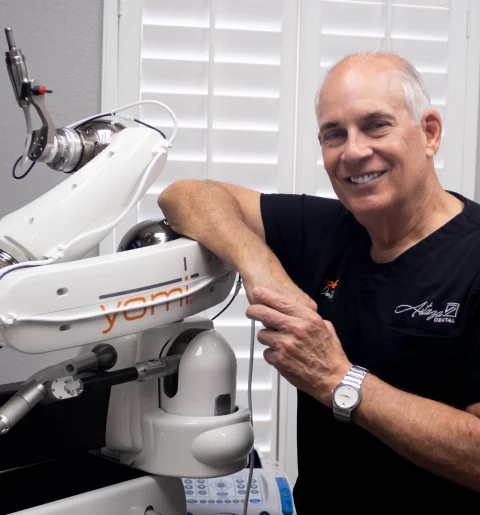
If you’re considering replacing a missing tooth, you’ve probably heard that dental implants are the gold standard. What you may not have heard is that robotic dental implant placement with platelet-rich fibrin (PRF) is the platinum standard. This minimally invasive approach offers exceptional precision during implant placement and uses your body’s own healing properties to support recovery, helping create the ideal foundation for long-lasting dental implants.
Most people want to know one thing before committing: is this a fix that lasts, or something they’ll have to redo in a few years? At Artaza Dental, that’s one of the most common questions we hear at our dental office in Katy, and the answer is worth understanding before you make any decisions.
Why the Answer Is More Nuanced Than You’d Think
The implant post itself (the titanium piece that fuses with your jawbone) can last a lifetime with proper care. The crown attached to the top, however, is a different story.
Crowns typically last 10 to 15 years before showing enough wear to need replacement, though many last longer depending on where they sit in the mouth and how well they’re maintained.
What Actually Determines How Long Your Dental Implant Lasts
Longevity isn’t just about the materials, but also the conditions surrounding them. Several factors play a significant role in how well dental implants hold up over time.
The biggest ones include:
- Oral Hygiene Habits at Home
- Bone Density at the Time of Placement
- Whether You Grind or Clench Your Teeth
- Smoking or Tobacco Use
- How Consistently You Attend Dental Checkups
- The Location of the Implant in Your Mouth
Back teeth take on significantly more chewing force than front teeth, which means implants in those positions tend to experience more wear. Knowing this upfront helps set realistic expectations.
Bone Health: Why It’s the Foundation of Everything
Dental implants work because the titanium post fuses directly with your jawbone in a process called osseointegration. Without sufficient bone density, that fusion either doesn’t happen fully or breaks down over time, which is why bone health evaluation is one of the first steps at our dental office in Katy before any implant procedure begins.
The good news is that bone loss isn’t always a dealbreaker. Bone grafting can restore enough density to make implants viable for many people who initially don’t qualify, which is something worth discussing during a consultation rather than assuming implants aren’t an option.
The Role of Gum Disease in Implant Failure
One of the leading causes of dental implant failure isn’t the implant itself. It’s a condition called peri-implantitis, which is essentially gum disease that develops around an implant. Left untreated, it causes the surrounding bone to deteriorate and can ultimately compromise the implant’s stability.
This is exactly why treating any existing gum disease before placing dental implants is non-negotiable. An implant placed in an unhealthy environment is far less likely to last, no matter how well the procedure goes.
Habits That Quietly Shorten Implant Lifespan
Some of the biggest threats to implant longevity are things people do every day without realizing the impact. Grinding and clenching—particularly during sleep—puts enormous pressure on implant crowns and can crack or loosen them over time.
Other habits worth watching include:
- Using Teeth as Tools to Open Packaging
- Chewing Ice or Hard Candy Regularly
- Skipping Flossing Around the Implant Site
- Ignoring Early Signs of Gum Irritation
A custom nightguard can go a long way toward protecting implants for people who grind, and it’s a conversation worth having with our dentist sooner rather than later.
What Long-Term Maintenance Actually Looks Like
Caring for dental implants isn’t complicated. It’s largely the same routine that protects natural teeth. Brushing twice a day, flossing daily, and keeping up with professional cleanings twice a year covers the basics for most people.
Where things get more specific is in how you clean around the implant site. Interdental brushes and water flossers tend to do a better job clearing debris from around the implant base than standard floss alone. Your care team at Artaza Dental can walk you through the best tools for your specific implant placement during any routine visit to our Katy office.
A Long-Term Investment Worth Making
When you weigh the lifespan of dental implants placed at our Katy office against alternatives like bridges or dentures, which require more frequent replacement and ongoing adjustments, implants consistently come out ahead in both function and value over time. The upfront cost is higher, but the long-term math tends to favor implants for most eligible candidates.
At Artaza Dental, every implant consultation starts with an honest conversation about your specific situation, your bone health, and what realistic longevity looks like for you. Ready to find out if implants are the right long-term solution? Call us today to schedule your consultation.